About Safeguards Information System
About Viet Nam’s Safeguards Information System
REDD+ is an international mechanism under the United Nations Framework Convention on Climate Change (UNFCCC) that aims to provide results-based payments to developing countries for the successful implementation of measures which reduce emissions from deforestation and forest degradation including through sustainable management of forest resources and conservation and enhancement of forest carbon stocks.
REDD+ as a concept has evolved over time and it is now widely acknowledged that in addition to climate change mitigation, or ‘carbon benefits’, it can provide a range of ‘non-carbon co-benefits’. However, REDD+ could also result in environmental and social risks.
In recognition that social and environmental risks associated with REDD+ must be addressed (REDD+ does no harm), and that benefits are promoted (REDD+ does good), Parties to the UNFCCC agreed to a set of seven safeguards for REDD+ at COP 16 in Cancun 2010, referred to as the ‘Cancun safeguards’.
Viet Nam has developed a country safeguards framework, in order to meet safeguard requirements for REDD+ under the UNFCCC and other relevant initiatives and institutions. Its country safeguards framework aims to ensure:
● REDD+ policies and measures are developed and implemented in a manner that is consistent with the safeguards (regardless of their type of funding source);
● A Safeguards Information System (SIS) is in place to provide information, accessible to all relevant stakeholders, on how the safeguards are being addressed and respected; and
● Summaries of Information on safeguards are submitted periodically to the UNFCCC and other applicable donors or funders for REDD+.
Viet Nam’s country safeguards framework has been developed with the engagement of stakeholders from government and non-government organisations. The framework involves several key elements. Following the determination of the goals and scope of the safeguards approach, a clarification of the safeguards [add link to clarification] in accordance with Viet Nam’s national circumstances was developed, based on an assessment of governance arrangements, including safeguards relevant policies, laws and regulations. Key safeguards processes and procedures have been developed and applied, such as mechanisms for benefit and grievance redress. Viet Nam’s SIS has been established, based on the national clarification of the Cancun safeguards, which forms the underlying structure of the system, as well as the identification of existing information systems and sources relevant to the safeguards.
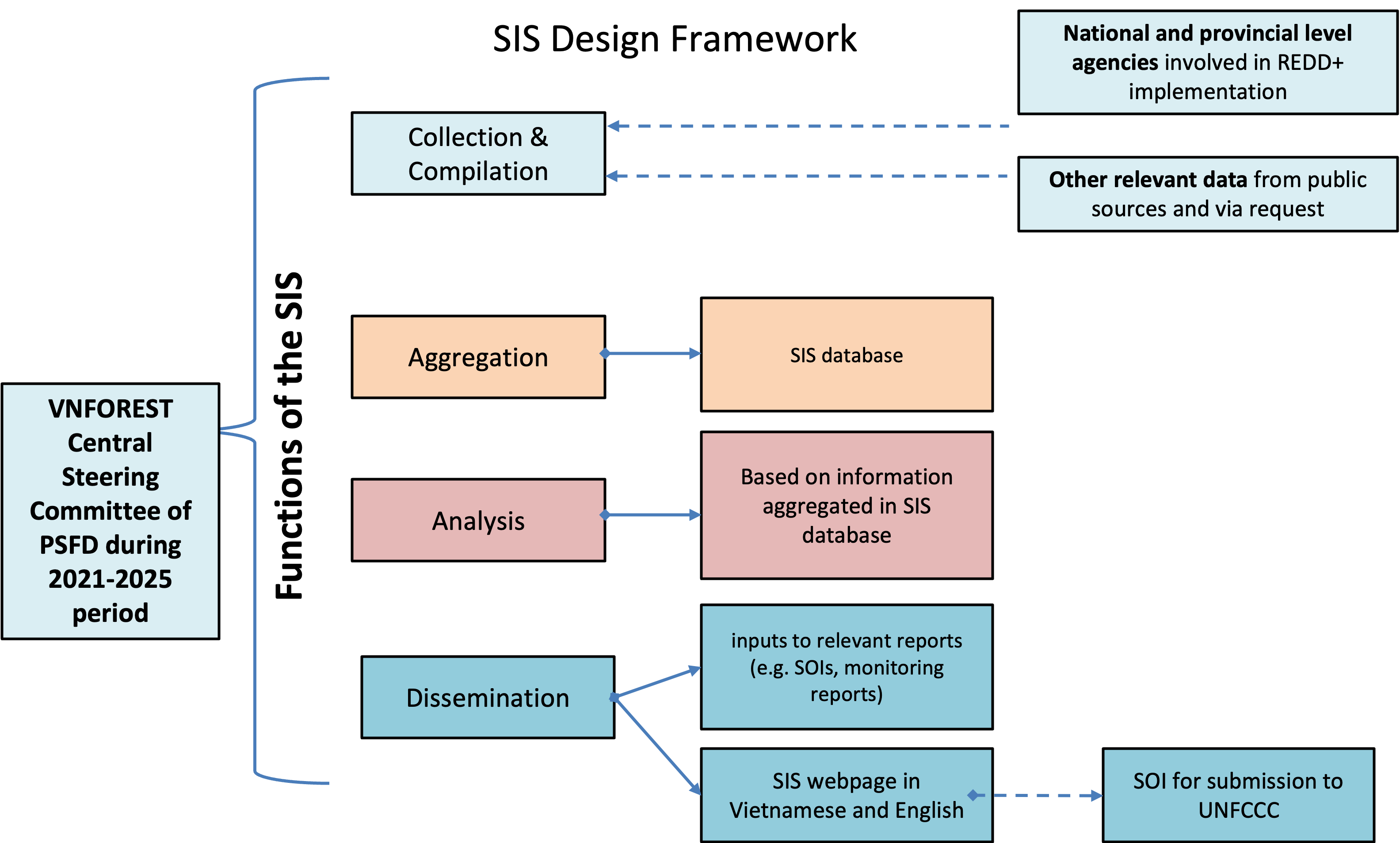
SIS’s objectives in Viet Nam
- 2016-2020: to meet UNFCCC safeguards reporting requirements and produce summaries of information. It is also proposed that the SIS should gather and provide information on safeguards implementation for the proposed Forest Carbon Partnership Facility Emissions Reduction Programme, in the North Central Coast Region, during this period.
- After 2020: to support monitoring of priority activities in the forestry sector, such as Payments for Forest Environmental Services (PFES), and contribute to the enhancement of governance in the forestry sector, by supporting the monitoring of policy implementation and law enforcement in the forestry sector.
Information in Viet Nam’s SIS
Viet Nam’s SIS provides information on how the safeguards are being addressed and respected. While there is no official definition of the terms ‘addressed’ and ‘respected’, Viet Nam applies these terms in its SIS in line with their generally understood meaning[1], as follows:
- Addressed: provision of information about the governance arrangements relevant to the safeguards, including policies, laws and regulations, institutions, grievance redress mechanisms, etc.; and
- Respected: provision of information about how these governance arrangements are working in practice, together with the outcomes of their implementation
For each safeguard, the SIS shows the Cancun safeguard principle, followed by Viet Nam’s specific safeguard elements. Under each element, a set of parameters show how that safeguard is being addressed and respected.
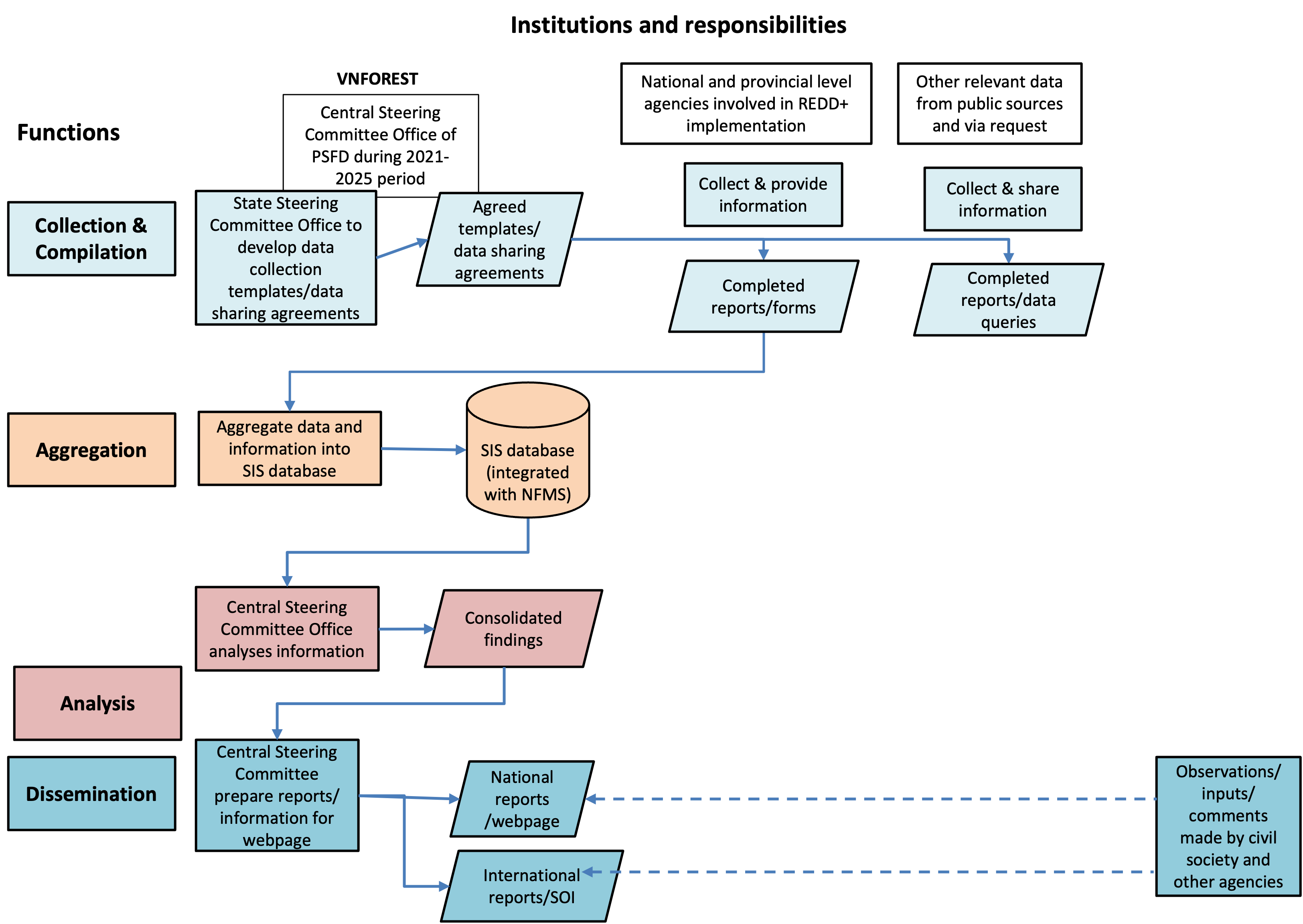
The information presented in Viet Nam’s SIS is drawn from a range of sources, including the national Forest Resources Management System (FRMS) , the General Statistics Office [https://www.gso.gov.vn/), reporting from REDD+ emissions reductions programs, and other relevant ministries and departments (e.g. for ethnic minority affairs, biodiversity, and access to justice, among other topics). Please see the sitemap for more detail on the SIS information structure. Information in Viet Nam’s SIS is updated regularly, depending on the source of the information.
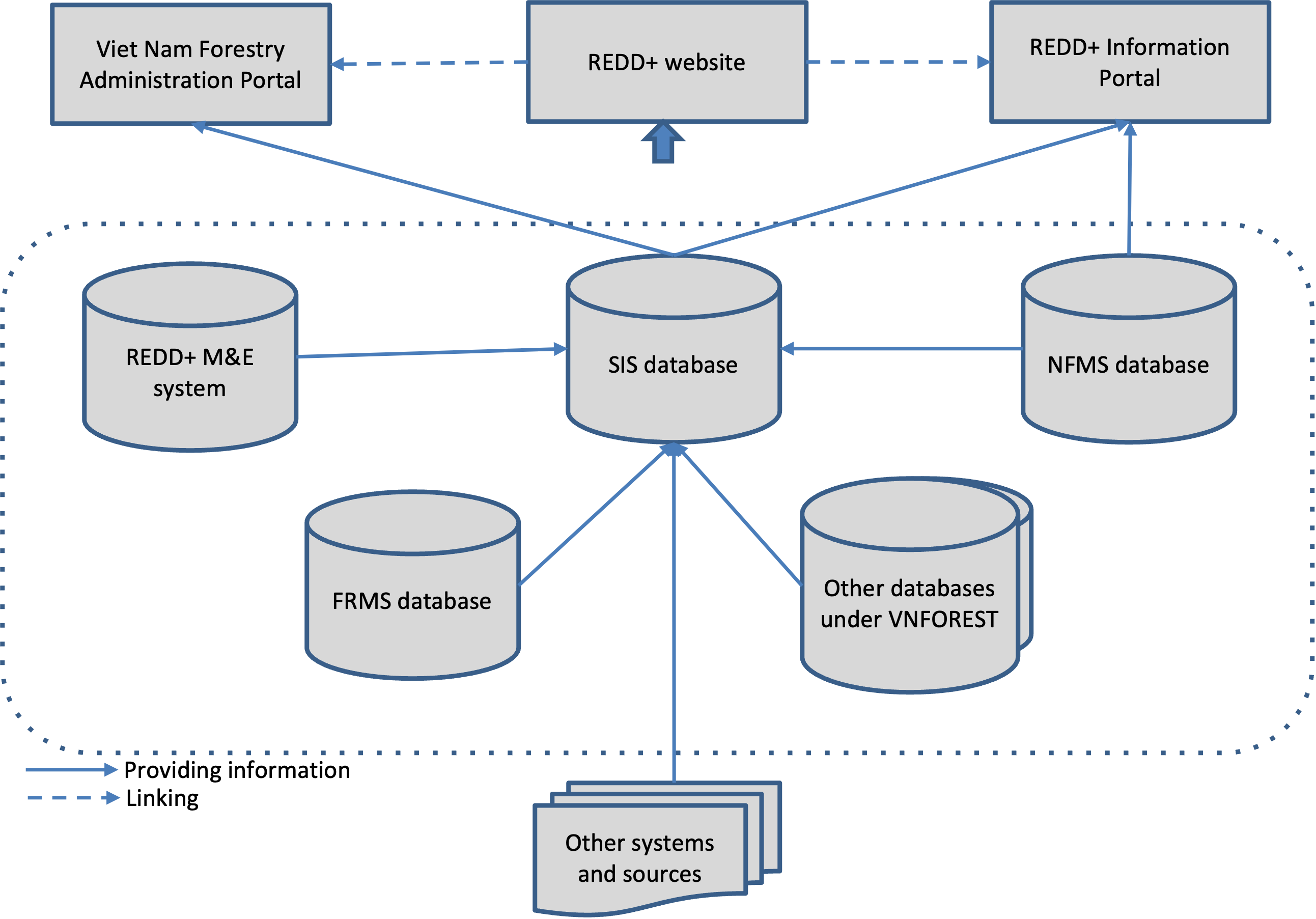
As shown in the diagram above, the SIS website and database are managed by the Viet Nam Forestry Administration (VNFOREST), Ministry of Agriculture and Environment (MAE). Information in the SIS is compiled and submitted by agencies responsible for REDD+ implementation at national and provincial levels, and analysed and reviewed by multiple stakeholders through the process of developing Summaries of Information on safeguards.